
Biomedical Computing Center
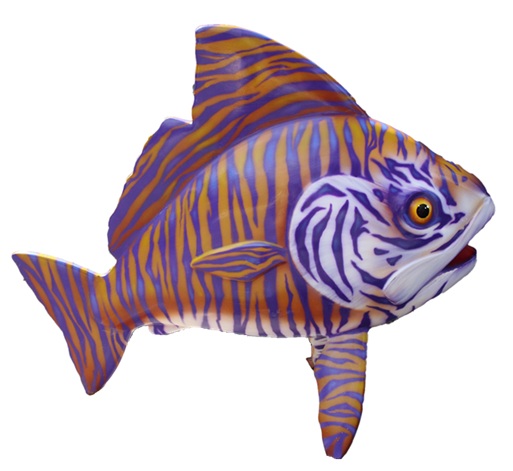

The LSUHSC Biomedical Computing Center provides two powerful HPC clusters, combining
the new technology of TigerShark with the existing capacity of Tiger Fish. Both are
currently available completely free to all researchers, faculty, and students. Think
of it this way — while your laptop or desktop is a single powerful machine, our clusters
are like having access to hundreds of computers all working together at the same time,
sharing enormous amounts of memory and storage.
What Can You Do With Our Clusters?
- Run analyses that crash your laptop due to memory or processing limitations
- Process datasets that are gigabytes or terabytes in size
- Train machine learning and deep learning models using powerful GPUs
- Run the same analysis on hundreds of samples simultaneously in the time it would take to run just one
- Run genomics pipelines — variant calling, RNA-seq analysis, sequence alignment
- Perform neuroscience simulations and computational modeling at scale
- Perform molecular dynamics simulations
- Collaborate with team members on shared computing resources
TigerShark — Our Newest and Most Powerful Cluster
- TigerShark is built with the latest AMD processors and equipped with four state-of-the-art NVIDIA RTX PRO 6000 Blackwell GPUs.
- Each standard computing node has 96 CPU cores and 375 GB of memory. Each node is roughly to 40 high-end laptops working together, and 10 nodes are available.
- TigerShark includes two high memory nodes each holding over 1 TB of RAM, ideal for whole-genome analyses, large-scale neuroscience simulations, and any research involving very large datasets.
- TigerShark also features four NVIDIA RTX PRO 6000 Blackwell GPUs with 96 GB of dedicated memory that make it an exceptionally powerful for deep learning, AI model training, and GPU-accelerated scientific computing.
Tigerfish — Our Established and Proven Cluster
- Proven track record supporting research across virtually every department.
- 36 compute nodes, a dedicated 1.5 TB high-memory node, and a GPU node for machine learning,
- Each of the 36 standard compute nodes has 40 CPU cores and 180 GB of memory.
- ideal for large distance matrix computations, whole-genome analyses, or any task requiring a very large dataset to be held in memory all at once.
- includes a GPU node with two NVIDIA Tesla V100 GPUs for machine learning, deep learning, and other GPU-accelerated workloads.
Tigerfish Citation/Acknowledgement
The LSUHSC-NO HPC Tigerfish cluster was purchased through a grant awarded by the National
Science Foundation (Award #2018936). Please Acknowledge the NSF Grant #2018936 in
any publications that have benefited from use of the Tigerfish HPC.
How to Get Access
Getting access to either or both clusters is free for LSUHSC users.
Send an email to Deepa Madireddy,Scientific Computing Support Specialist at dmadir@lsuhsc.edu and include:
- Your name
- The name of your PI or supervisor
- Your department,
- A brief description of your research needs
Accounts are typically created within one to two business days.
Training and Support
New to HPC? No problem. We offer training sessions, one-on-one support, and comprehensive documentation to help you get started. Whether you are writing your very first job script or optimizing a complex multi-step pipeline, support is available every step of the way. Contact us to request a training session or ask any questions about getting started.
Visit the Resources page for more information.